Feed

Page 5 of 27

Erik Craddock@eriklink

The Center Has a Bias

What matters here is a narrower point. The center is not biased towards novelty so much as towards contact with the thing that creates potential change. The middle ground is not between use and non-use, but between refusal and commitment and the people in the center will often look more like adopters than skeptics, not because they have already made up their minds, but because getting an informed view requires exploration.

The Center Has a Bias

Armin Ronacher

The Center Has a Bias

Why a measured position on AI tends to lean towards actually trying it.

linkby Erik Craddock (@erik)Credit: Armin Ronacher
Erik Craddock@eriklink

The 2nd Phase of Agentic Development

I think we’re going to see a lot more reimaginings, where people attack old problems with modern tactics. Coding agents lower the costs of taking on stalwarts and raise our ability to rapidly harden our software. I can think of many software tools that people rely on but don’t like. Those are the prime targets for reimagining.

The 2nd Phase of Agentic Development

Drew Breunig

The 2nd Phase of Agentic Development

Moving from clones to reimaginings.

linkby Erik Craddock (@erik)Credit: Drew Breunig
Erik Craddock@eriklink

My Quest to solve Bitcoins greatest mystery

Satoshi revealed? seems plausible to me.

I recalled how 10 years before, Satoshi had come out of hiding to help Mr. Back win the war over block size. And here Satoshi was, back again in a luxury hotel in El Salvador. Only this time, he had served Mr. Back less well because he’d removed any lingering doubt in my mind that I had the right man.

My Quest to solve Bitcoins greatest mystery

nytimes.com

My Quest to solve Bitcoins greatest mystery

linkby Erik Craddock (@erik)
Erik Craddock@eriklink

Wit, unker, git: The lost medieval pronouns of English intimacy

The evolution of the English language is fascinating to me. When I look at old english its hard to believe the language we speak to day used to sound that way.

In the Beowulf, the dual makes a dramatic appearance: two warriors swim in the sea holding swords, "to defend the two of us against whales" ("wit unc wið hronfixas werian" in the original). Thought to be written in the 8th Century, Beowulf is the earliest European epic written in the vernacular – the language commonly spoken – rather than a high culture, or literary language.

Wit, unker, git: The lost medieval pronouns of English intimacy

BBC

Wit, unker, git: The lost medieval pronouns of English intimacy

Tales of love and adventure from 1,000 years ago reveal a dazzling range of now-extinct English pronouns. They capture something unique about how people once thought about "two-ness".

linkby Erik Craddock (@erik)Credit: Sophie Hardach
Erik Craddock@eriklink

Your code is worthless

We must return to the fundamental truth The source code is not the product. The product is the Outcome the user achieves. The code is merely the expensive, high-maintenance machinery required to deliver that outcome. If you can deliver a $1,000,000 outcome with 10 lines of code, you are a hero. If you deliver that same outcome with 37,000 lines, you have just created a $1,000,000 liability.

Your code is worthless

Nathaniel Fishel

Your code is worthless

Why "Vibe Coding" and vanity metrics are creating a technical debt bubble.

linkby Erik Craddock (@erik)Credit: Nathaniel Fishel
Erik Craddock@eriklink

The Cathedral, the Bazaar, and the Winchester Mystery House

This certainly describes the primary way I use AI agents.

There is only one source of feedback that moves at the speed of AI-generated code: yourself. You're there to prompt, you're there to review. You don't need to recruit testers, run surveys, or manage design partners. You just build what you want, and use what you build.

And that's what many developers are doing with cheap code: building idiosyncratic tools for ourselves, guided by our passions, taste, and needs.

The Cathedral, the Bazaar, and the Winchester Mystery House

Drew Breunig

The Cathedral, the Bazaar, and the Winchester Mystery House

Welcome to the era of sprawling, idiosyncratic tooling.

linkby Erik Craddock (@erik)Credit: Drew Breunig
Erik Craddock@eriklink

Thoughts on slowing the fuck down

And I would like to suggest that slowing the fuck down is the way to go. Give yourself time to think about what you're actually building and why. Give yourself an opportunity to say, fuck no, we don't need this. Set yourself limits on how much code you let the clanker generate per day, in line with your ability to actually review the code.

Thoughts on slowing the fuck down

mariozechner.at

Thoughts on slowing the fuck down

Thoughts on slowing the fuck down

linkby Erik Craddock (@erik)
Erik Craddock@eriklink

The Illusionist and the Conjurer

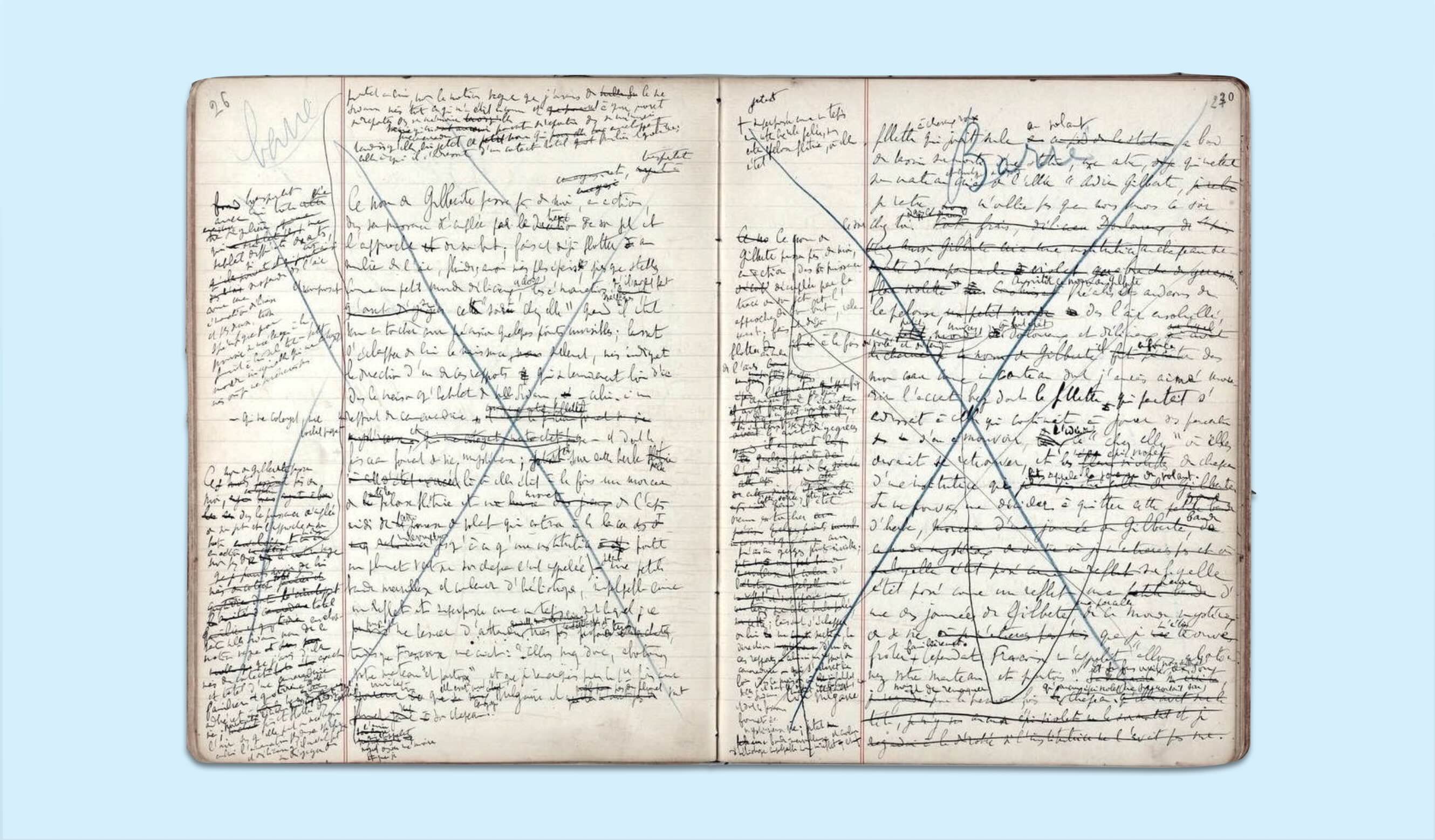
Instead, the art moved from capturing images to choosing them. From the shutter finger to the editing eye. From “can I get the shot?” to “can I find the shot, in all of this, and do I know it when I see it?” The technical act got cheap. The judgment got more valuable. And an entire universe of new things that nobody predicted, things that couldn’t have existed in the era of 36 exposures, grew in the space that opened up.

I think that’s what’s happening now. With slides, with code, with writing, with design, with whatever domain you’re generating abundance in. The raw material is becoming infinite. The craft is migrating somewhere else.

The Illusionist and the Conjurer

Works on My Machine

The Illusionist and the Conjurer

Penn & Teller have this philosophy about their craft.

linkby Erik Craddock (@erik)Credit: Scott Werner
Erik Craddock@eriklink

You Are Not Your Job

I think this all makes sense for someone in the author's situation of which I am one. It should be remembered that there probably weren't many impoverished homeless people interviewed on their death beds. I'm assuming some of those would have had regrets about not earning enough money. My point is that even though people like me may be worrying about things like identity crisis, AI agents could have more tangible consequences for some.

Saying "I am a software engineer" is beginning to feel like saying "I am a calcultor" in 1950 now that digital machines can use electrical circuits to count, add, multiply - it's not long until they'll be able differentiate a non-continuous function... You're beginning to feel less-than-useful.

This bothers a lot of people for a reason (I think) that has nothing to do with the technology. The fear isn't really about losing a job title, it's about losing the story you tell yourself about who you are.

Jacob Young

You Are Not Your Job

linkby Erik Craddock (@erik)Credit: Jacob Young
Erik Craddock@eriklink

ImportAI 449: LLMs training other LLMs; 72B distributed training run; computer vision is harder than generative text

Imagine where we’ll be in two years – we’ll certainly have AI models that are smart enough to point themselves at a specific objective, find an open weight model, then autonomously improve it to get better performance at that task. The era of ephemeral, custom AI systems, built and budded off into the world like spores from mushrooms, draws near. Are you ready for this new ecosystem you will find yourself in? I am not. But nonetheless it approaches.

ImportAI 449: LLMs training other LLMs; 72B distributed training run; computer vision is harder than generative text

Import AI

ImportAI 449: LLMs training other LLMs; 72B distributed training run; computer vision is harder than generative text

Welcome to Import AI, a newsletter about AI research. Import AI runs on arXiv and feedback from readers. If you’d like to support this, please subscribe. Subscribe now Can LLMs autonomously refine …

linkby Erik Craddock (@erik)